

4 products
Kagoshima Matcha
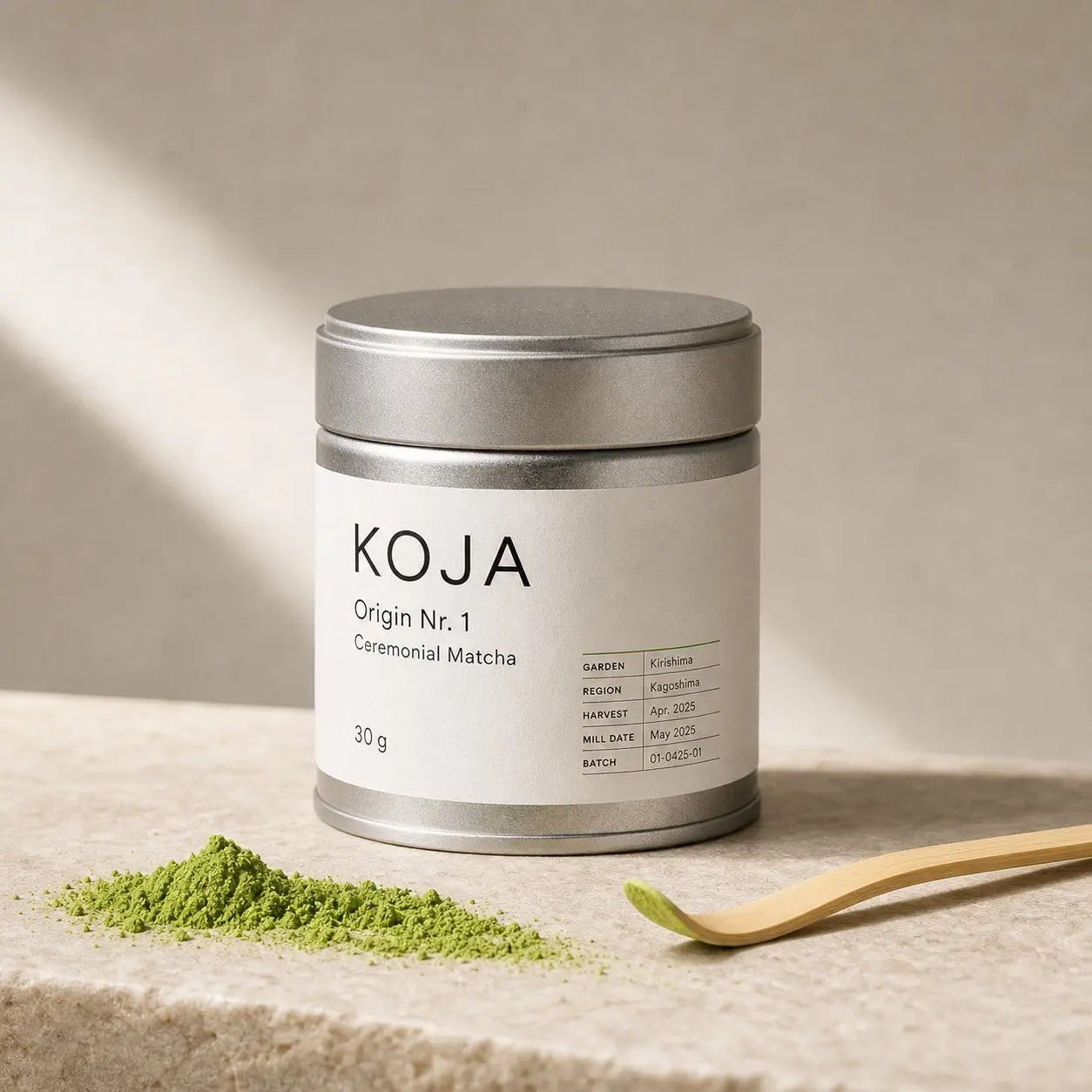
Kagoshima sits at the southern tip of Kyushu and has grown into Japan's second largest tea region. A warm Pacific climate, volcanic soils and modern gardens make it the most important counterweight to Uji in today's matcha market. KOJA's single estate ceremonial, Origin Nº 1, is grown here.
What makes Kagoshima different as a tea region?
Geography, mostly: it is Japan's southernmost major growing area, with volcanic soils and some of the earliest harvests in the country. Ash from the region's active volcanoes built deep, well-draining soils that tea roots take to readily. The warm southern climate wakes the plants early: the first flush typically starts in early April, often weeks before more northern regions pick a single leaf.
The land itself shaped the farming. Where Uji's tea grows on small plots folded between hills, much of Kagoshima's tea stands on open plains and plateaus. Flat land allows large contiguous gardens and large gardens allow a style of tea farming that the next section describes.
Scale is the other half of the picture. Kagoshima today accounts for a substantial share of Japan's total tea production and its tencha capacity has been growing while Uji's is essentially fixed by its geography. That trajectory is recent enough that many drinkers in Europe still know the region's matcha only from blends, where it quietly does much of the work.
How does Kagoshima differ from Uji?
Uji is the heritage model and Kagoshima is the modern one; neither owns quality. Uji built the matcha category over centuries: small family plots, hand work and names that carry weight far beyond Japan. Kagoshima entered tencha production much later and built for this century instead: larger consolidated gardens, mechanized harvesting, modern shading systems and continuous investment in processing lines.
The craft steps that define the grade are the same in both places: weeks of shading before harvest, first-flush picking, careful steaming and drying, slow milling. What differs is the organizational model around those steps. The heritage model produces small quantities with a famous postcode. The modern model produces consistent quality at a scale that can be planned and audited, which is precisely what a brand built on batch data needs.
Which cultivars are typical for Kagoshima?
Yutaka Midori, Saemidori and Okumidori are the names you will meet most often from the region. While much of Japan's tea area is planted with the single workhorse cultivar Yabukita, Kagoshima diversified early and now grows one of the broadest cultivar mixes in the country.
- Yutaka Midori: deep green color and a full, rich umami. An early-budding cultivar that suits the warm south.
- Saemidori: known for natural sweetness and a vivid green cup. A frequent choice for high-grade tencha.
- Okumidori: late-budding, balanced and smooth. Often used to round out a profile.
These are regional patterns, not a product claim. What our garden actually harvested for a given batch and when it was milled is printed on the batch data sheet of that tin, not implied by a region name.
Why does Kagoshima matter during the matcha shortage?
Because it has the capacity to keep delivering while demand outruns supply. In 2025/26 global demand for tencha outran the harvest and the famous Uji houses moved to allocation: fixed quotas, waitlists and empty shelves for everyone who built on a single supplier.
Kagoshima's larger gardens and mechanized harvest scale in a way heritage smallholdings cannot. That does not make the region immune to a tight market, but it makes supply planning possible. For you as a buyer that translates simply: batches keep arriving, mill dates stay recent and the matcha you liked is still in stock when you come back for the refill. It is one of the reasons KOJA sources from three regions with Kagoshima as the anchor; the full reasoning behind that decision is on the about page.
What does single estate mean at KOJA?
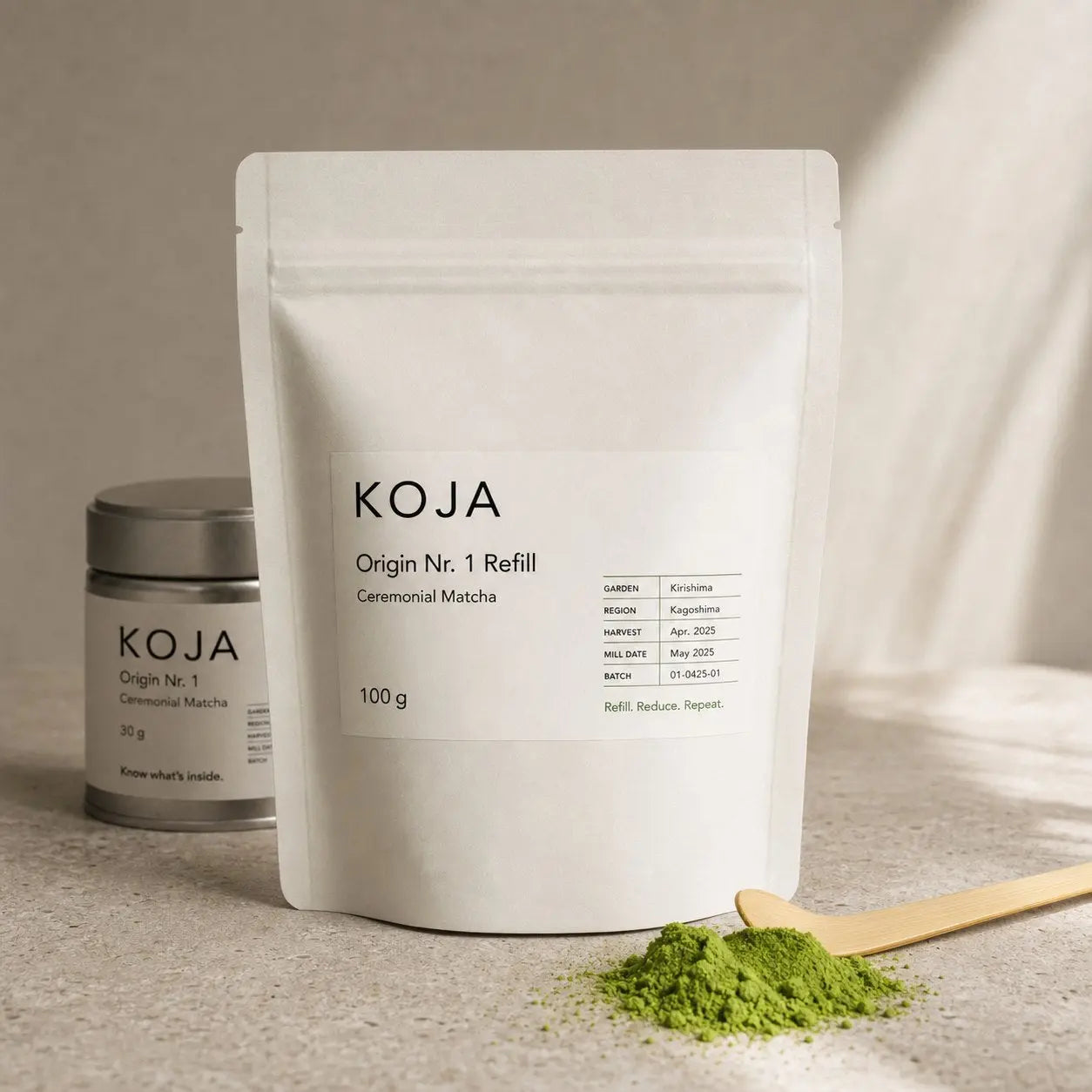
One garden, one region, one traceable batch. Origin Nº 1 is not blended across suppliers: every batch comes from the same Kagoshima estate and ships with its printed data sheet covering garden, region, harvest and mill date, lab-tested per batch. You can check the sheet of your tin on the batch verify page.
The formats: a 30 g tin for 39 € (15 bowls at 2 g), a 100 g refill for 89 € (50 bowls) and a 10 g sample for 9.90 € if you want five bowls of proof before committing. For the grade context around it, the ceremonial matcha collection compares Origin Nº 1 with our daily blend.
FAQ
Is Kagoshima matcha as good as Uji matcha?
Grade follows process, not postcode: shading weeks, first-flush picking and careful milling decide what lands in the bowl. Both regions produce the full quality range. Judge the batch in front of you, which is exactly what a printed data sheet lets you do.
What does Kagoshima matcha taste like?
The region is known for full-bodied, deeply colored teas. Origin Nº 1 specifically leads with deep umami, carries a soft natural sweetness and finishes without bitterness when prepared at 80 °C. Whisked straight at 2 g per bowl it shows the profile most clearly.
When is matcha harvested in Kagoshima?
The spring harvest typically begins in early April, among the earliest in Japan thanks to the warm southern climate. The exact harvest of your batch is one of the four fields printed on every KOJA data sheet.


