

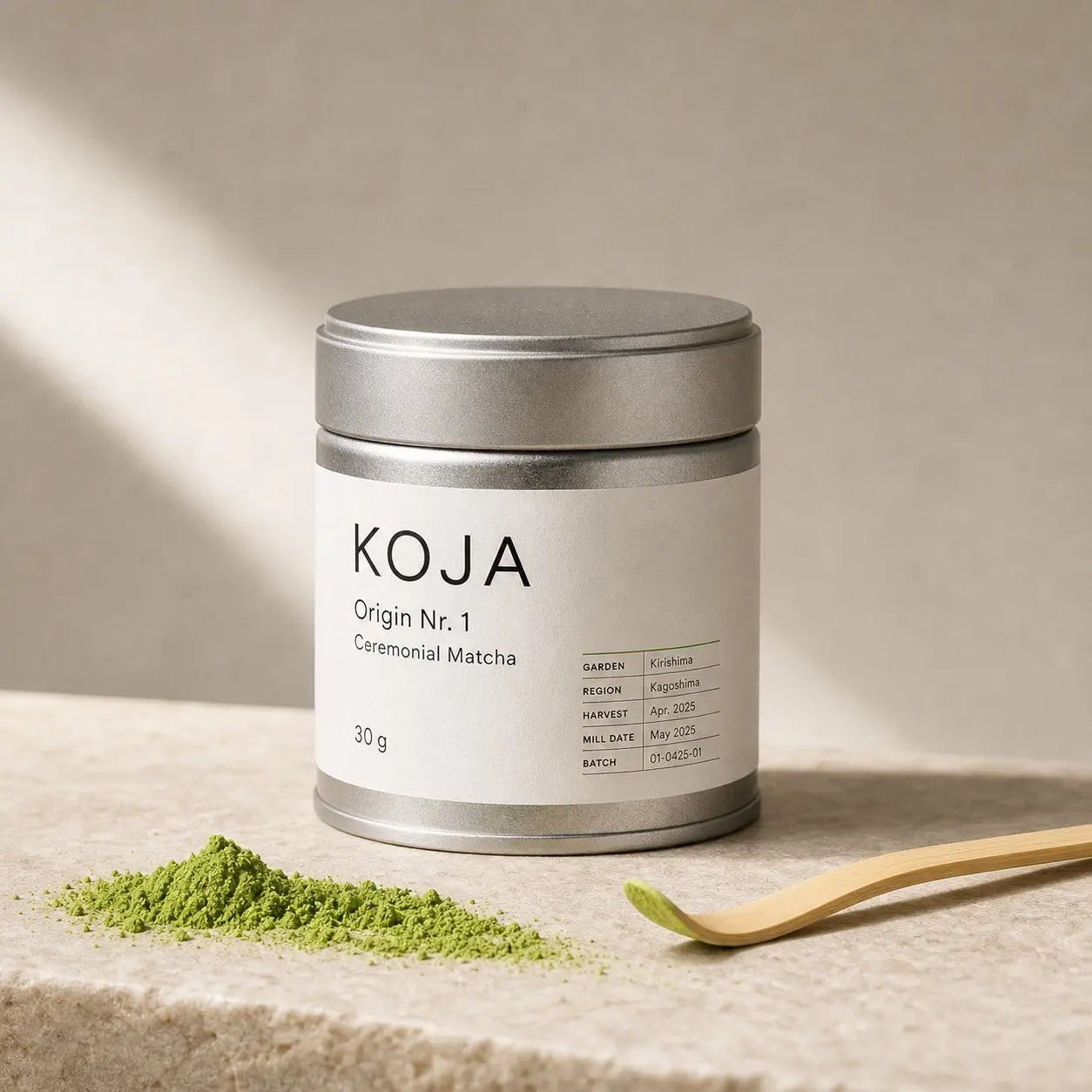
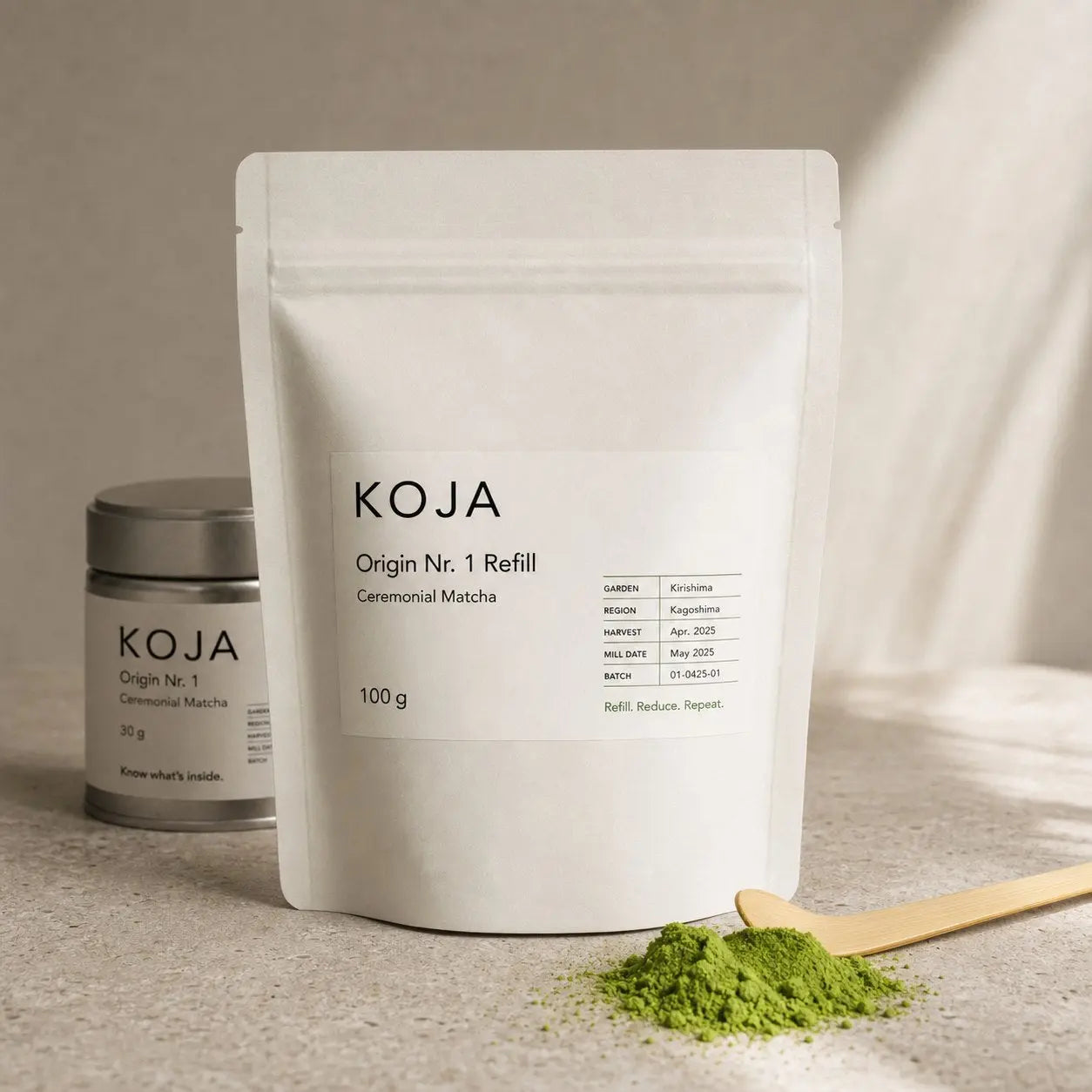
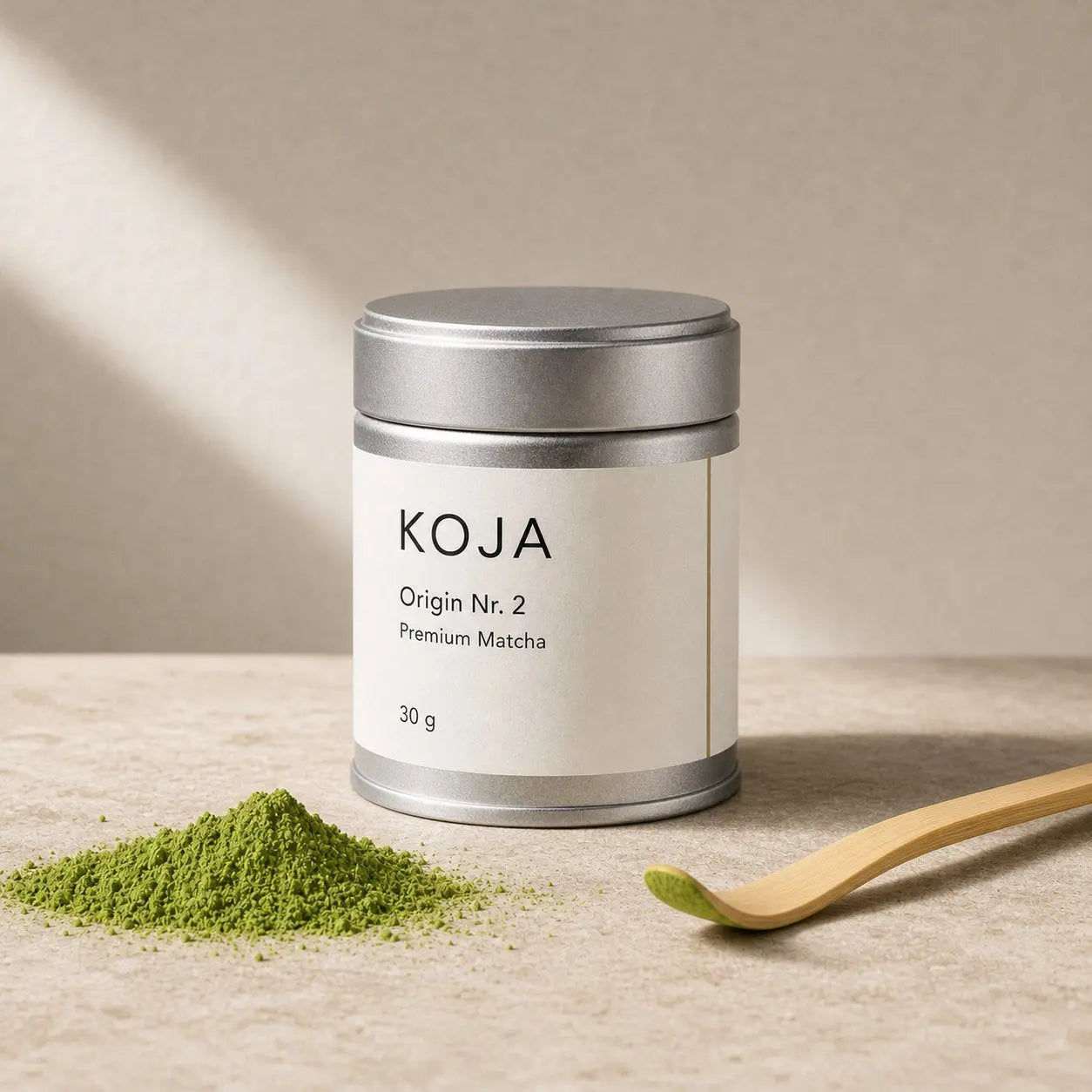
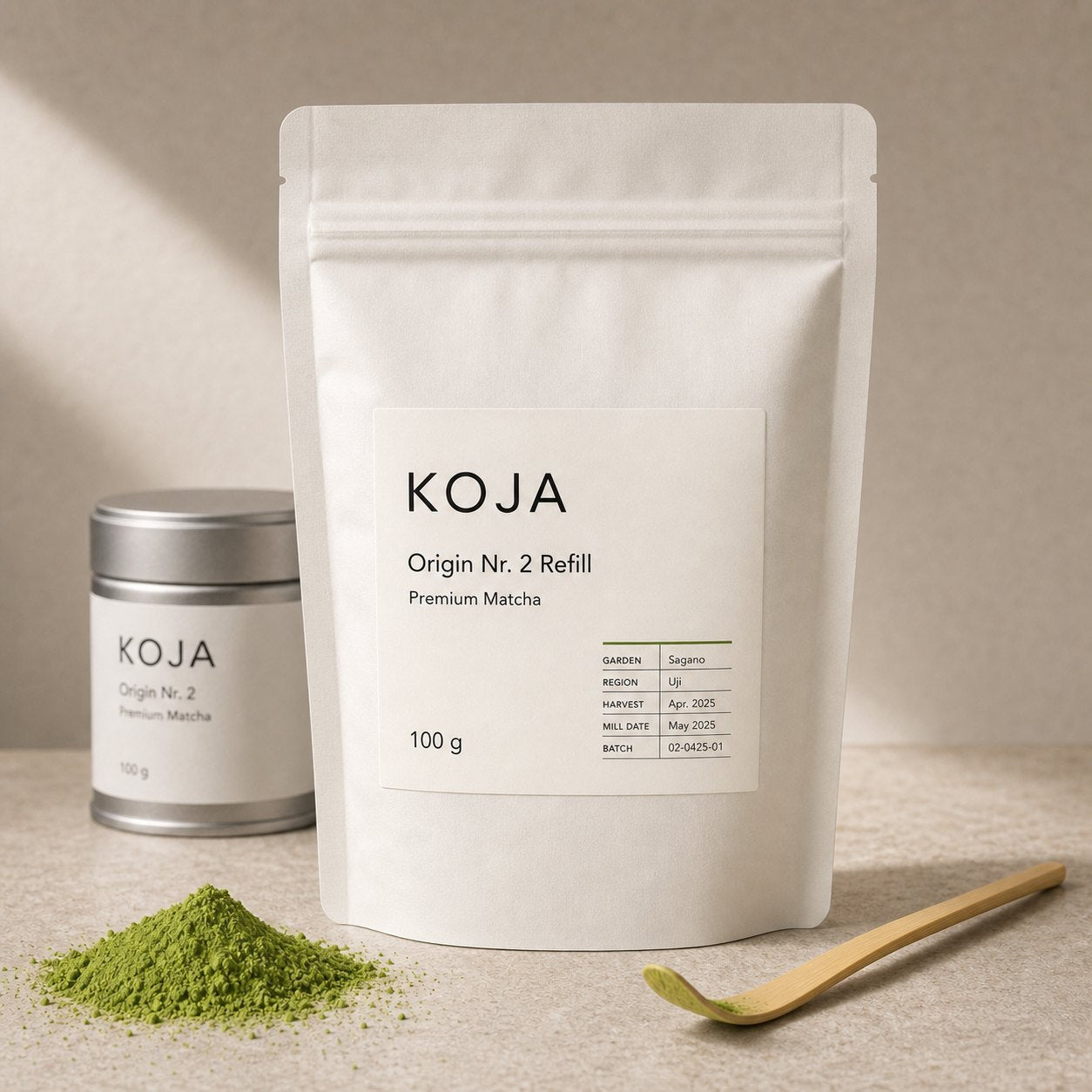
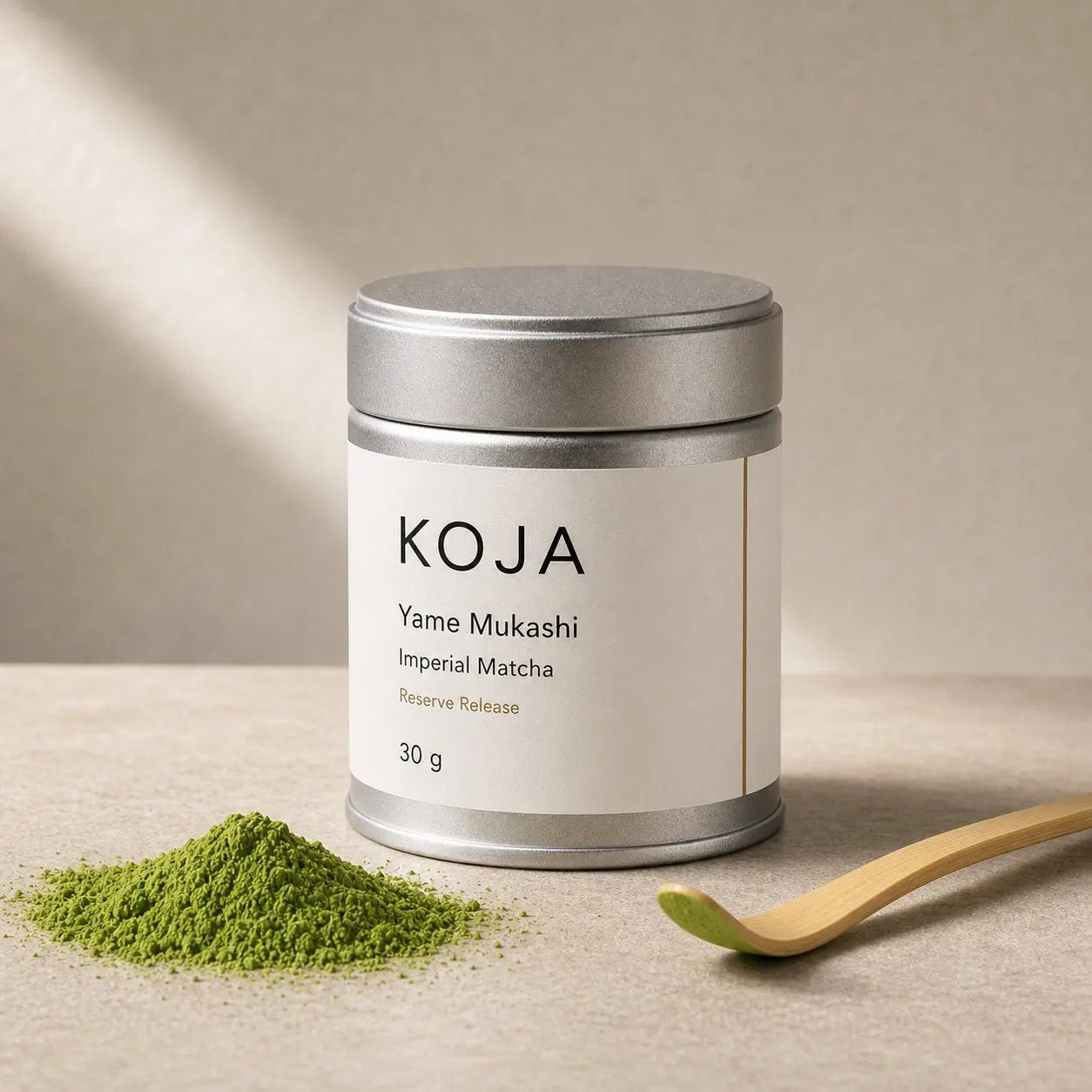
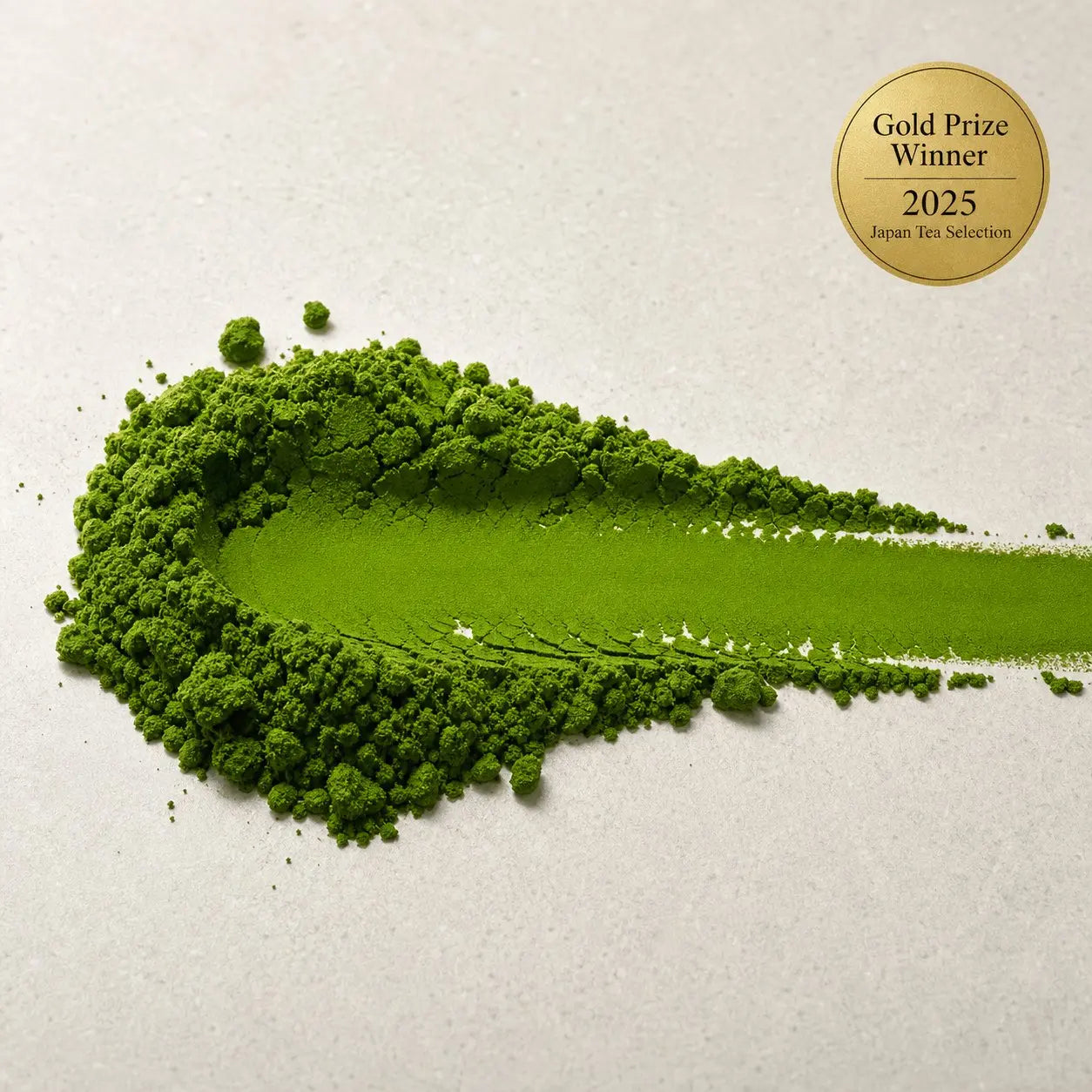
Ceremonial Matcha ist beschatteter First-Harvest-Tencha, steingemahlen und fein genug für die pure Schale mit Wasser. Der Begriff ist allerdings nicht geschützt: Jede Marke darf ihn drucken. Deshalb findest Du hier statt Marketing eine Checkliste und 2 Single Origins, deren Herkunft auf der Dose steht.
Woran erkennst Du echten Ceremonial Matcha?
5 Punkte, in dieser Reihenfolge:
- Farbe: leuchtendes Frühlingsgrün. Olivtöne heißen altes Pulver oder späte Ernte.
- Herkunft: eine benannte Region. Product of Japan ist eine Zollangabe, keine Herkunft.
- Charge-Daten: Region, Grade, Ernte und Lot auf der Dose, prüfbar auf der Verify-Seite.
- Ernte: First Harvest. Frühjahrsblatt bringt die Süße und das Umami, für die der Grade steht.
- Preis pro Schale: Dosengrößen variieren, teile den Preis durch die Schalenzahl.
Welchen Ceremonial Matcha kaufst Du bei KOJA?
Kagoshima Ceremonial (39 €, 30 g, 15 Schalen) ist der vollmundige: tiefes Umami, weiche Süße, kein bitterer Abgang bei 80 °C. Uji Reserve (39 €, 30 g) kommt aus Japans klassischer Matcha-Region und läuft heller und klarer. Gleicher Grade, gleicher Preis, 2 Geschmacksbilder. Darüber sitzt Yame Imperial (59 €, limitiert), Gold Prize der Japanese Tea Selection Paris 2025.
Unsicher? Beide Origins gibt es als 10-g-Probe für je 9,90 €: Kagoshima-Probe und Uji-Probe, je 5 Schalen. Oder gleich das Probierset mit 5 Sorten (39 €).
Was kostet die Ceremonial-Schale?
- Dose 30 g: 39 €, also 2,60 € pro Schale.
- Refill 100 g: 89 €, also 1,78 € pro Schale.
- 90-Tage-Vorrat 180 g: 149 €, also 1,66 € pro Schale.
Jede Zahl gilt für die 2-g-Schale. Ein Matcha Latte im Café kostet das Mehrfache, und Du weißt dort selten, welche Region im Becher ist.
Wie bereitest Du Ceremonial Matcha zu?
2 g sieben, etwa 70 ml Wasser bei 80 °C, im W zügig schaumig schlagen. Kochendes Wasser ist der häufigste Fehler: Zu viel Hitze macht auch exzellentes Blatt bitter. Schritt für Schritt: Zubereitungs-Guide.
FAQ
Ist Ceremonial Grade ein geschütztes Siegel?
Nein. Es gibt keine gesetzliche Definition und keine Zertifizierungsstelle. Deshalb stützt KOJA jedes Label mit Daten: Region, Grade, Ernte und Lot stehen auf jeder Dose.
Kann ich Ceremonial Matcha im Latte trinken?
Kannst Du, aber Milch überdeckt genau die Nuancen, für die Du zahlst. Für Milch ist der Daily-Blend gebaut, siehe Matcha für Latte.
Was unterscheidet Kagoshima und Uji?
Region und Charakter, nicht Qualität: Kagoshima ist tief und umami-geprägt, Uji heller mit feiner Süße. Mehr zur Region in der Kagoshima-Collection.