

4 products
Matcha for Lattes
Searching for the best matcha for lattes? The short answer: a fresh ceremonial blend with enough body to carry 150 to 200 ml of milk. This page explains why blends beat delicate single estates in milk, how to dose a latte properly and which mistakes ruin most homemade versions.
What makes a matcha good for lattes?
Body. Milk mutes flavour, so a latte matcha needs concentration and roundness rather than subtlety. The nuances you pay for in a top single estate, the soft marine notes, the long mineral finish, are exactly what disappears first under oat or cow milk. Pouring milk over a delicate single origin is not wrong. It is just paying for detail you will never taste in the cup.
A blend built with body keeps its green, slightly sweet core audible through the milk. That is a different job description than a matcha for plain water, which is why this page reads differently from our ceremonial matcha page. Same quality bar, different destination.
Which KOJA matcha should you use for lattes?
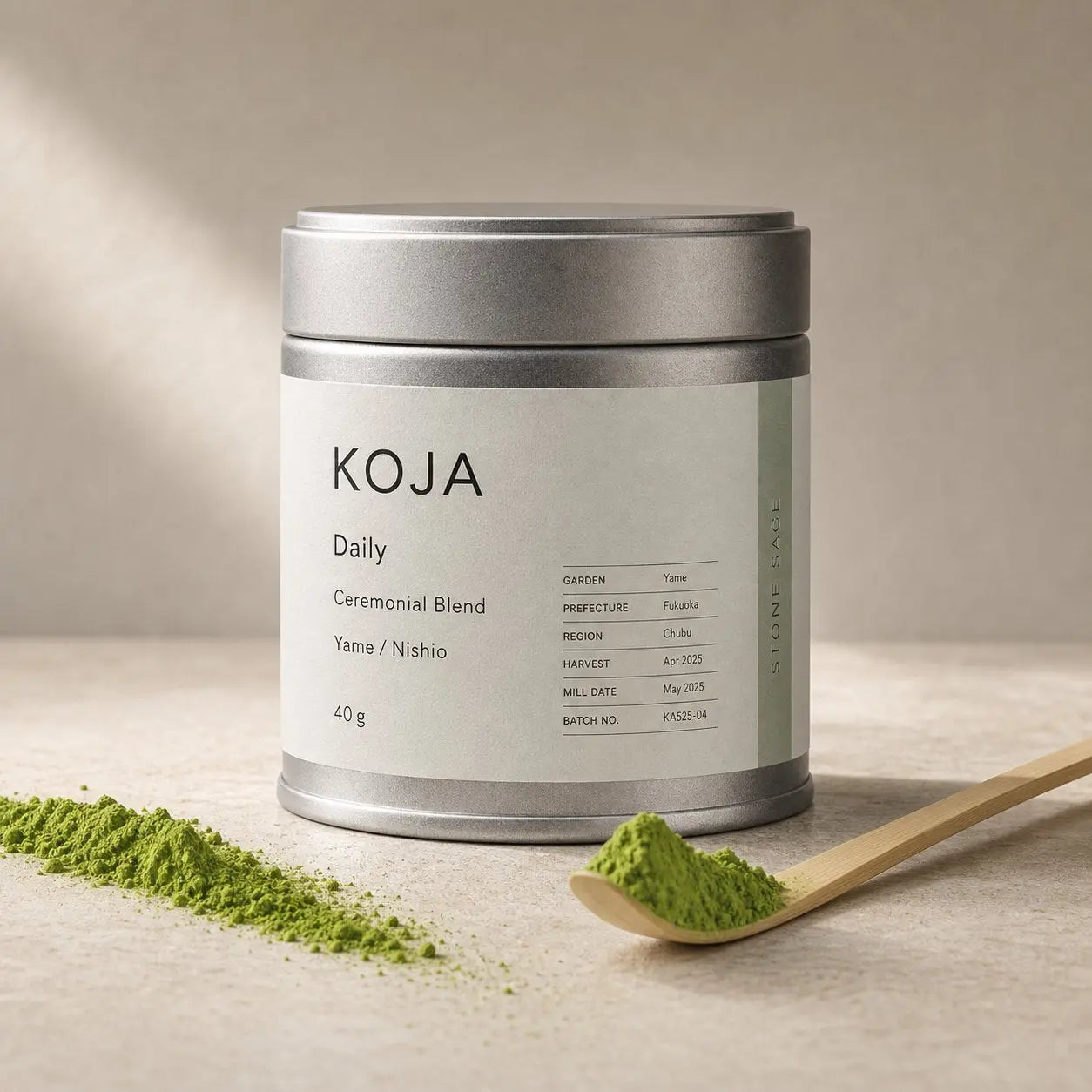
KOJA Daily (29 €). It is a ceremonial blend from Yame and Nishio, fresh and round, with enough presence to stay matcha-forward once the milk lands. The tin holds 20 bowls at the 2 g bowl dose, which translates to roughly 13 lattes at the 3 g latte dose. Per 2 g serving that is 1.45 €.
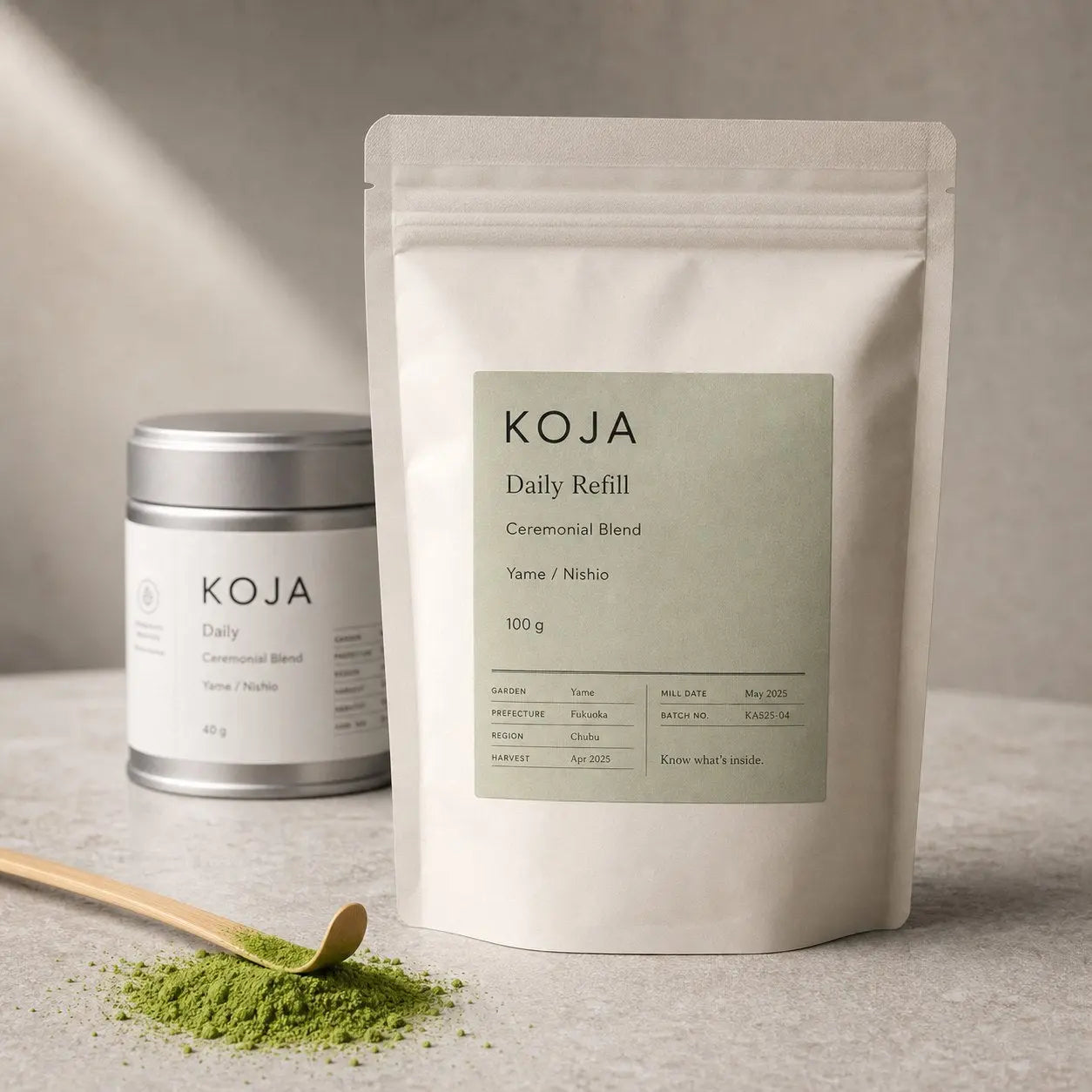
If a latte is your daily default, the maths favour the refill pouch: 1.30 € per 2 g serving and the tin you already own gets reused instead of binned. Every tin carries the printed batch data sheet, garden, region, harvest and mill date, so you know how fresh the powder in your latte actually is. Mill date matters more for lattes than people assume: stale matcha drifts dull and milk amplifies dullness.
How do you dose a matcha latte?
3 g of matcha per latte, not the 2 g you would use for a plain bowl. Milk dilutes, so the dose goes up. The method that works every single time is the concentrate method:
- Sift 3 g of matcha into a small bowl or jug.
- Add about 30 ml of hot water, well below boiling, around 80 °C.
- Whisk or froth into a smooth, thick concentrate with no visible clumps.
- Pour 150 to 200 ml of milk over the concentrate, or layer the concentrate on top of the milk for the two-tone look.
The concentrate step is non-negotiable. Matcha stirred directly into a full cup of milk never disperses evenly, no matter how long you stir. Concentrate first, milk second. That order is 90 percent of café-level results at home.
Hot or iced: does the method change?
Only the milk changes. The concentrate stays identical in both versions, which is exactly what makes the method practical. Hot latte: warm the milk, froth it lightly and pour it over the concentrate. Iced latte: fill a glass with ice and cold milk, then pour the concentrate on top and stir once. Cold drinks mute flavour slightly more than hot ones, so stay at the full 3 g for iced versions. Going down to 2 g is how iced matcha lattes end up tasting like tinted milk.
Should you froth with an electric frother or a chasen?
For lattes, the frother wins on workflow. A USB-C handheld frother turns 3 g and 30 ml of water into a smooth concentrate in about 10 seconds with no technique required, then textures your milk as well. The chasen produces the finer foam in plain water, but that advantage shrinks once 200 ml of milk lands on top of it. Our position is simple and unromantic: chasen for plain bowls, frother for lattes. Use whichever you own today rather than postponing the first latte.
What are the most common matcha latte mistakes?
Three errors cause almost every disappointing homemade matcha latte:
- Boiling water on the powder. Water straight off the boil scorches matcha and pulls bitterness forward, which no amount of milk repairs. Let the kettle sit for a few minutes before you make the concentrate.
- Too little powder. A 2 g bowl dose vanishes in 200 ml of milk. The result tastes like warm milk with a green tint and gets blamed on the matcha. Use 3 g.
- Skipping the sift. Clumps survive frothing and surface as bitter specks in the finished drink. Ten seconds with a sifter fixes the texture of the entire latte.
Fix these three and a 29 € tin outperforms most café lattes in your area.
Do you serve matcha lattes in a café?
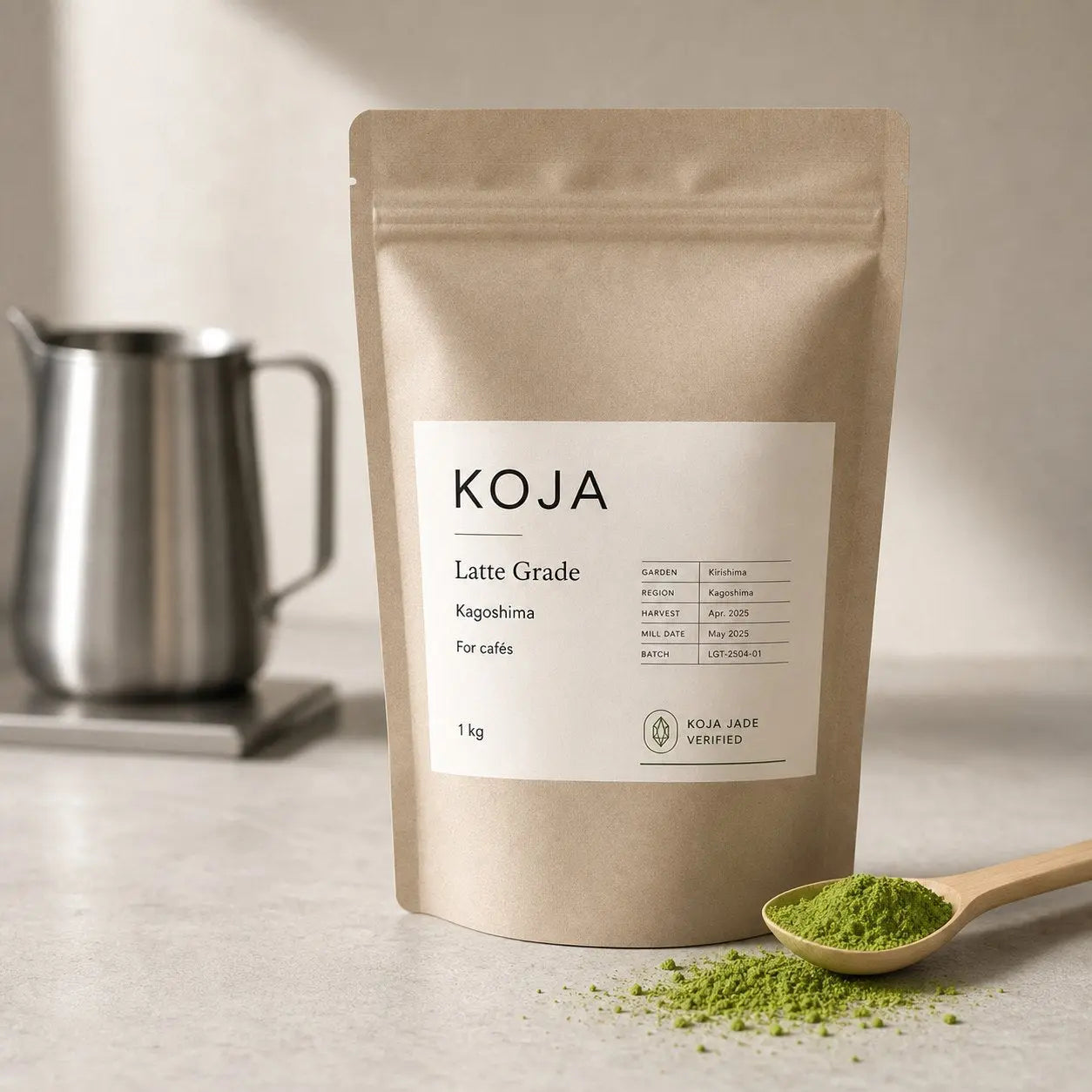
KOJA supplies cafés with a dedicated latte grade from Kagoshima, built for milk, with stable recurring batches and a printed batch data sheet you can put on the counter for your guests. Pack sizes, terms and the contact form are on our B2B page.
FAQ
Can I use Origin Nº 1 in a latte?
You can and it will taste good. You will simply pay single estate prices for nuance that milk covers up. Keep Origin Nº 1 for plain bowls and run KOJA Daily for milk drinks. That split is exactly what the two products were designed for.
How much caffeine does a matcha latte have?
More than a plain bowl, because a latte uses 3 g of matcha instead of 2 g. Matcha pairs its caffeine with L-theanine, which most drinkers describe as steady focus without the spike and crash. Numbers and comparisons against coffee are on our matcha and caffeine page.
Which milk works best with matcha?
Whatever froths well in your kitchen. Barista oat milk is the most forgiving option and its natural sweetness sits comfortably next to the green profile. Whole cow milk gives the classic round texture. Thin or watery milks make thin lattes regardless of how good the matcha is.


