

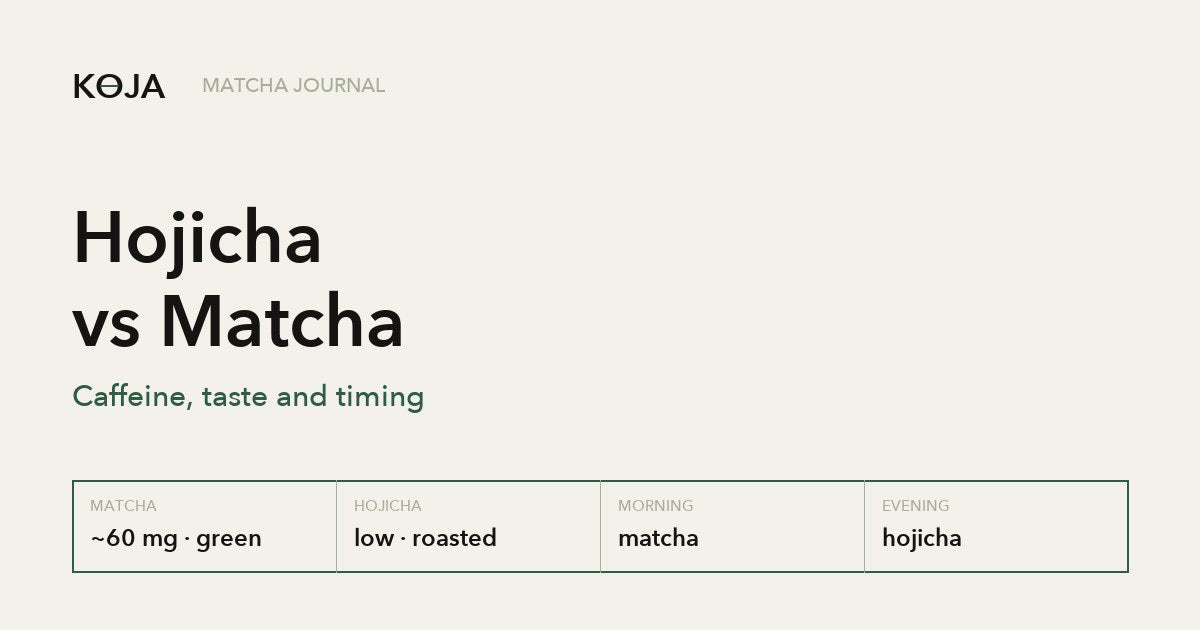
Short answer: Matcha is shade-grown green tea, stone-milled and grassy-sweet with umami depth and roughly 60 mg caffeine per 2 g bowl. Hojicha is the same plant roasted: toasty, nutty, naturally low in caffeine. Matcha is the morning and deep-work bowl, hojicha is the afternoon and evening bowl. Neither is better, they carry different hours of your day.
What is the actual difference between hojicha and matcha?
One production step: roasting. Matcha starts as tencha, leaf that grew under shade for weeks, which builds up L-theanine and that deep green color, then gets stone-milled raw. Hojicha takes green tea leaf and roasts it at high heat before milling. The roast transforms everything: color turns from vivid green to warm brown, grassy umami becomes toast and caramel, and a large share of the caffeine is reduced in the process.
| Matcha | Hojicha | |
|---|---|---|
| Leaf | shaded, unroasted | roasted |
| Color | vivid spring green | warm caramel brown |
| Taste | umami, grassy, gently sweet | toasty, nutty, caramel |
| Caffeine per 2 g bowl | about 60 mg | a fraction of matcha, naturally low |
| Best time | morning, deep work | afternoon, evening |
| KOJA price | from 29 € / 30 g | 29 € / 30 g |
How much less caffeine does hojicha have?
Noticeably less. Roasting reduces caffeine and hojicha is typically made from later-harvest, unshaded leaf, which starts lower to begin with. A matcha bowl sits around 60 mg per 2 g serving; hojicha lands at a fraction of that, which is why Japan pours it in the evening and even serves it to children. If you love the ritual but not the 9 pm heart rate, this is the swap. The full caffeine numbers live on our caffeine page and in the 2 g numbers article.
What does hojicha taste like compared to matcha?
Where matcha is green, hojicha is brown, and the taste follows the color. Matcha brings umami depth, fresh grass and a gentle natural sweetness. Hojicha brings roasted nuts, caramel and a soft woody warmth, with no grassiness at all. People who find matcha too intense or too green often love hojicha immediately. Coffee drinkers recognize something familiar in the roast.
Which one works better in a latte?
Both work, differently. A matcha latte needs a blend with body like KOJA Daily, dosed at 3 g so the green survives the milk. A hojicha latte is the low-caffeine comfort version: the roasted notes carry milk beautifully, closer to a caramel latte than to anything grassy. Same method for both: sift 3 g, whisk a small hot concentrate, pour milk over it.
Should you buy hojicha or matcha?
Buy for the hour of the day you want to fill. Morning focus bowl: matcha, either the Daily blend or a single origin. Afternoon and evening ritual without the caffeine load: KOJA Hojicha, roasted in Kagoshima, stone-milled, 30 g tin for 29 € with batch data printed on the tin like every KOJA product. Most of our regulars end up with both: green for the morning, roasted for the evening. The full roasted line lives in the hojicha collection.
FAQ
Is hojicha a type of matcha?
No. Both are Japanese green tea and both come as fine powder, but matcha is shaded and unroasted while hojicha is roasted. Different process, different taste, different caffeine.
Does hojicha have caffeine at all?
Yes, a little. Roasting reduces caffeine and the base leaf starts lower than shaded tencha, so a bowl carries a fraction of matcha's roughly 60 mg. Low, not zero.
Can I prepare hojicha powder like matcha?
Exactly like it: sift 2 g, add 70 to 80 C water, whisk until smooth. For a latte, whisk 3 g into a small concentrate first, then add 150 to 200 ml of milk.
Why does hojicha taste sweet without sugar?
The roast caramelizes parts of the leaf and removes the grassy edge, which reads as toasty sweetness on the palate. There is no added sugar in pure hojicha powder.
Share:
Bester Matcha 2026: der ehrliche Kaufguide
Yame Matcha: Japan's Quiet Premium Region, Explained