

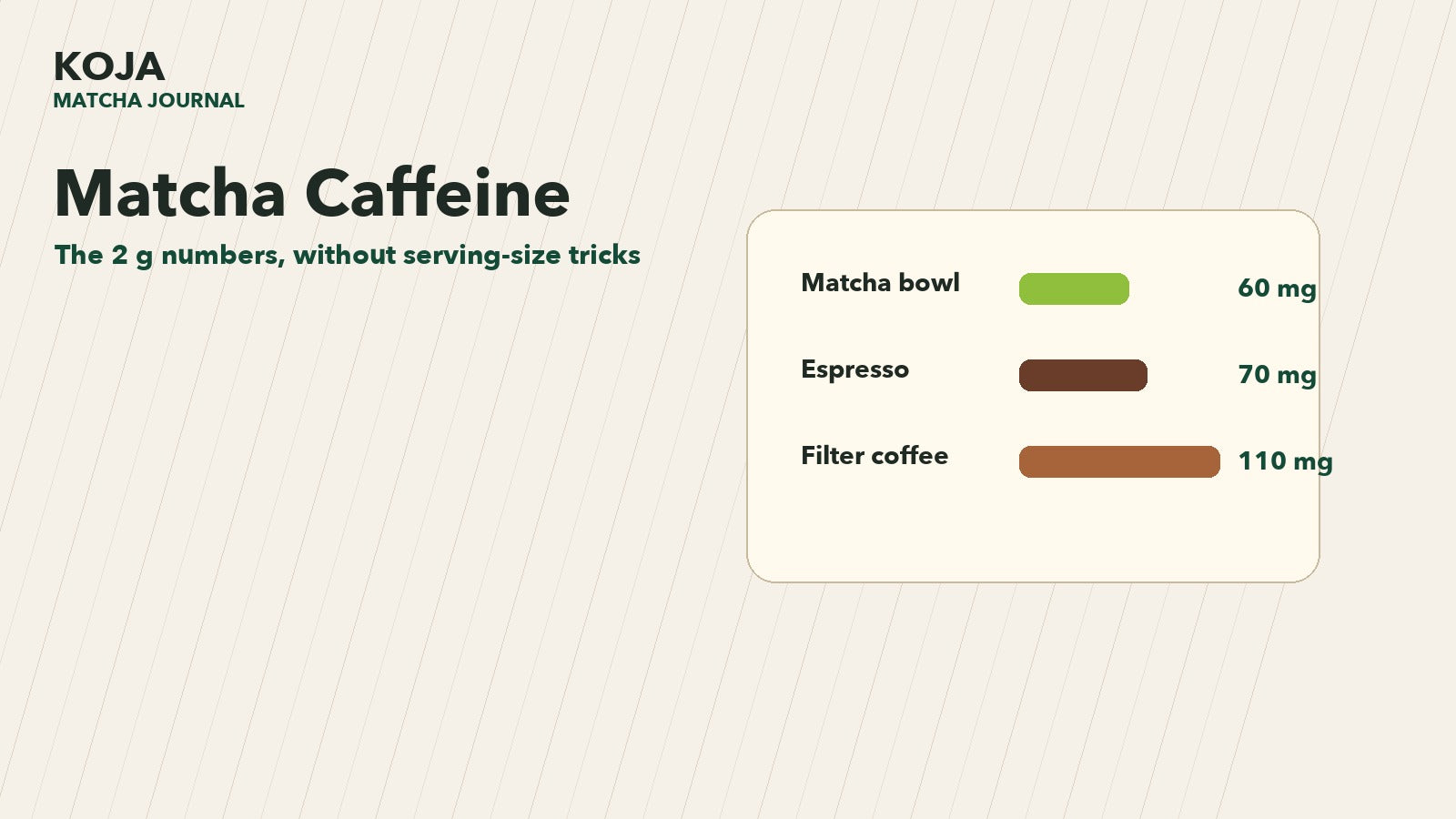
Short answer: A proper 2 g matcha bowl usually contains about 50-70 mg caffeine. That is close to espresso territory and below many 240 ml coffees. If a brand quotes a much lower number, check whether the serving size is 1 g or less.
This article is the narrow caffeine page. For the broader morning decision, read matcha vs coffee.

How much caffeine is in matcha?
A 2 g serving of matcha usually contains about 50-70 mg caffeine. A lighter 1 g serving often lands around half that. Caffeine changes by cultivar, harvest, shading, leaf grade and how much powder you actually use.
That is why KOJA uses 2 g as the baseline. It is enough powder for a real bowl, enough body for a latte and easy to repeat. It also keeps the serving math honest: 30 g equals 15 bowls.
How does matcha caffeine compare with coffee?
Matcha usually has less caffeine than a full mug of brewed coffee but a similar range to espresso. The comparison depends on the coffee size more than the word coffee.
| Drink | Typical serving | Typical caffeine range |
|---|---|---|
| Matcha | 2 g powder | 50-70 mg |
| Espresso | 30 ml | 60-75 mg |
| Brewed coffee | 240 ml | 80-120 mg |
| Large coffee | 350 ml plus | Often 120 mg plus |
If you use matcha to replace a large coffee, expect less total caffeine. If you use it to replace espresso, the total dose may feel surprisingly close.
Why does matcha caffeine feel steadier?
Matcha caffeine often feels steadier because matcha naturally contains L-theanine. The practical effect many people report is calmer focus rather than a fast spike.
That does not remove caffeine. Timing still matters. If coffee after 16:00 keeps you awake, a 2 g matcha bowl after 16:00 may do the same. Treat it like real caffeine, not herbal tea.
What changes the caffeine level in matcha?
The main variables are powder dose, leaf material, harvest, cultivar and blend. Preparation style matters less than dose because you consume the whole powder rather than steeping leaves and discarding them.
- Dose: 2 g has roughly double the caffeine of 1 g.
- Grade: shade-grown drinking grades are not caffeine-free.
- Blend: multi-region blends can vary by batch.
- Milk: a latte does not reduce caffeine unless you use less powder.
What is the honest way to test your matcha caffeine tolerance?
The honest test is one 2 g bowl at the same time for seven days. Do not judge caffeine from one under-dosed cafe drink or one overloaded home bowl.
Keep the method stable: 2 g powder, 60-70 ml water at 70-80 C and the same milk if you make a latte. Track three things: focus, restlessness and whether you want another caffeine source within two hours.
Start with a measurable serving
If you are comparing caffeine, start with a product that makes the dose visible. Choose all KOJA matcha for tins and refills, or taste the range first with the sample set: 5 sorts as 10 g samples.
FAQ
How much caffeine is in 2 g of matcha?
A serious 2 g bowl often lands around 50-70 mg caffeine. The exact number changes with cultivar, harvest, grade and powder dose.
Does matcha have less caffeine than coffee?
Usually yes compared with a full mug of coffee, but not always compared with espresso. Dose and cup size decide the result.
Why do brands show lower matcha caffeine numbers?
Often because they use smaller serving sizes. A 1 g serving naturally has less caffeine than a 2 g bowl.
Keep reading: Hojicha vs Matcha · The Best Matcha for Lattes
Share:
Matcha and Heavy Metals: What to Ask Before You Buy
Matcha and Heavy Metals: What to Ask Before You Buy