

A café iced matcha latte costs 5 to 6 € and takes ten minutes of queueing. The same drink takes three minutes in your kitchen, costs well under one euro in matcha and tastes better, because you control the dose and the milk. This iced matcha latte recipe needs no shaker, no syrup and no barista skills. One bowl, one whisk, one glass of ice. Here is the exact build we use, why the warm shot matters even for an iced drink and the mistakes that make iced matcha taste like cold grass water.
What is the quick iced matcha latte recipe?
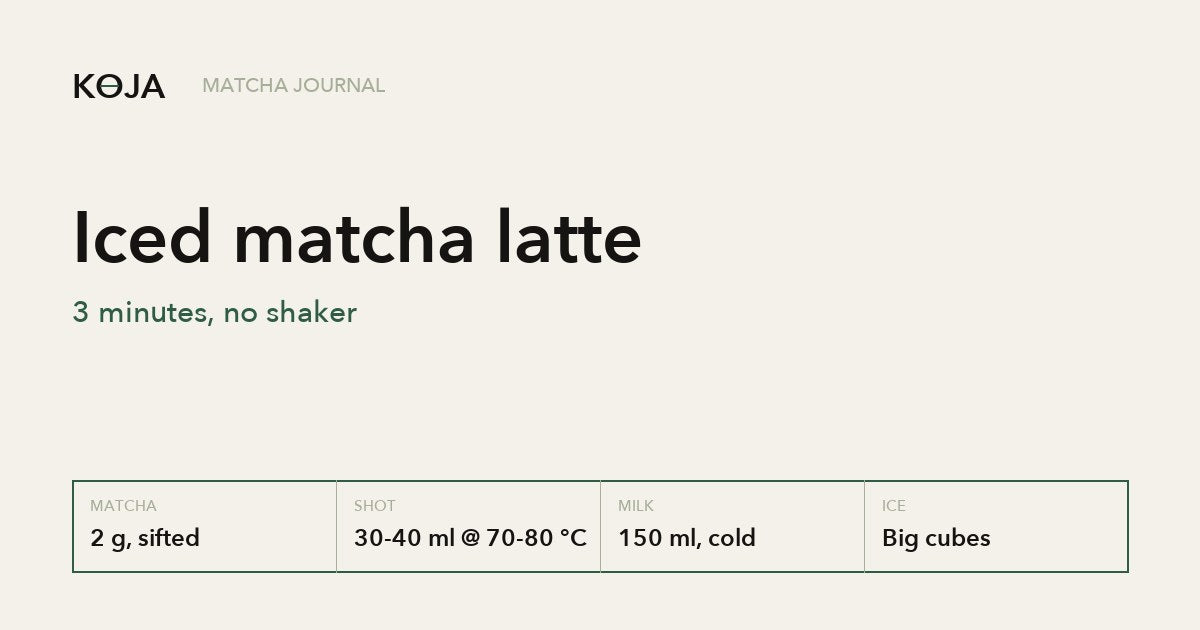
Sift 2 g of matcha, whisk it with 30 to 40 ml of 70-80 °C water into a smooth shot, fill a glass with ice and 150 ml of cold oat or whole milk, pour the shot over the top. Done. Three minutes, no queue and a color gradient that does the marketing for you.
What do you need?
| Component | Amount | Notes |
|---|---|---|
| Matcha | 2 g (3 g for strong) | A blend built for milk, not your finest single origin |
| Water | 30-40 ml at 70-80 °C | Boiled water, cooled for 2 to 3 minutes, lands in that range |
| Milk | 150 ml, cold | Oat or whole milk carries matcha best |
| Ice | A full glass | Big cubes melt slower and water the drink down less |
How do you make it, step by step?
- 1. Sift. Sift 2 g of matcha into a bowl. 30 seconds that remove every clump before it reaches your glass.
- 2. Whisk the shot. Add 30 to 40 ml of water at 70-80 °C and whisk until smooth and lightly foamy. No whisk? A small sealed jar and ten hard shakes gets you 90 percent there.
- 3. Build the glass. Fill it with ice, pour in 150 ml of cold milk.
- 4. Pour and layer. Pour the shot slowly over the milk. Stir when you drink, not before, if you like the layered look.

Why use warm water for an iced drink?
Because matcha does not dissolve, it suspends. Warm water releases aroma and lets the powder disperse evenly, so the shot stays smooth when it hits the ice. Whisked cold, most matcha clumps and settles at the bottom of the glass within minutes. The 30 ml warm shot barely warms the final drink and the payoff is texture. Boiling water stays off limits, iced or not: it scorches the powder, as we covered in why matcha tastes bitter.
Which matcha works iced?
Cold mutes flavor. Whatever you taste hot, you will taste less of it over ice, which means iced drinks punish delicate matcha twice: once through milk, once through cold. Use a robust first-harvest blend with real body. That is the job of the Matcha for Lattes collection, and the full logic of what survives milk is in the best matcha for lattes. Save the delicate single origin for a warm bowl with water.
On sweetener: try it without first. Good matcha over creamy milk carries its own gentle sweetness. If you want more, a small spoon of honey or syrup dissolved into the warm shot beats anything stirred into a cold glass.
What are the common iced matcha mistakes?
- Whisking cold. Clumps and sediment. Always make a warm shot first.
- Skipping the sift. Every clump you skip sifting, you drink later.
- Skim milk. Thin body, harsh finish. Fat carries matcha.
- Crushed ice. Melts fast and waters everything down. Use big cubes.
- Doubling the powder to fight the cold. More matcha adds more bitterness, not more flavor. Fix the blend, not the dose.
Can you batch it for guests?
Yes, and it is the easiest way to look like you know what you are doing. Whisk a quadruple shot, 8 g of sifted matcha with 120 to 150 ml of 70-80 °C water, and keep it in a sealed jar in the fridge. When guests arrive, shake the jar, build four glasses with ice and cold milk and pour. The shot holds for a few hours, the glasses take thirty seconds each and everyone gets the same layered pour a café charges 6 € for.
What does it cost per glass?
With the Daily 90-day box the matcha in your glass costs 0.99 € per 2 g bowl. Add your milk and you are still far under a third of the café price, every single day of the summer. The complete comparison is in what a matcha habit actually costs.
Want the honest test?
Make this recipe five afternoons in a row with a blend built for milk, then order the same drink at your café. If the homemade version does not hold up, tell us. Start with the Matcha for Lattes collection or lock in the routine with the 90-day box.
FAQ
Can you make an iced matcha latte without a whisk?
Yes. Shake the sifted matcha with the warm water in a small sealed jar for ten seconds, then pour it over ice and milk. A whisk gives finer foam, but the jar method is a solid everyday fallback.
Do you need hot water for an iced matcha latte?
You need warm water, 70-80 °C, for a 30-40 ml shot. It releases aroma and prevents clumping, and it barely warms the finished drink. Whisking directly into cold liquid leaves sediment.
How much matcha goes into an iced latte?
2 g is the baseline, 3 g if you want it strong against a lot of ice and milk. Increasing beyond that adds bitterness faster than flavor.
Can you prepare iced matcha in advance?
The shot, yes, a few hours in the fridge in a sealed jar. Shake before using because matcha settles. Build the glass with ice and milk fresh, otherwise the drink goes watery.
Share:
How to Choose Matcha: 5 Label Facts That Matter More Than Grade
The Best Matcha for Lattes: What Survives Milk