

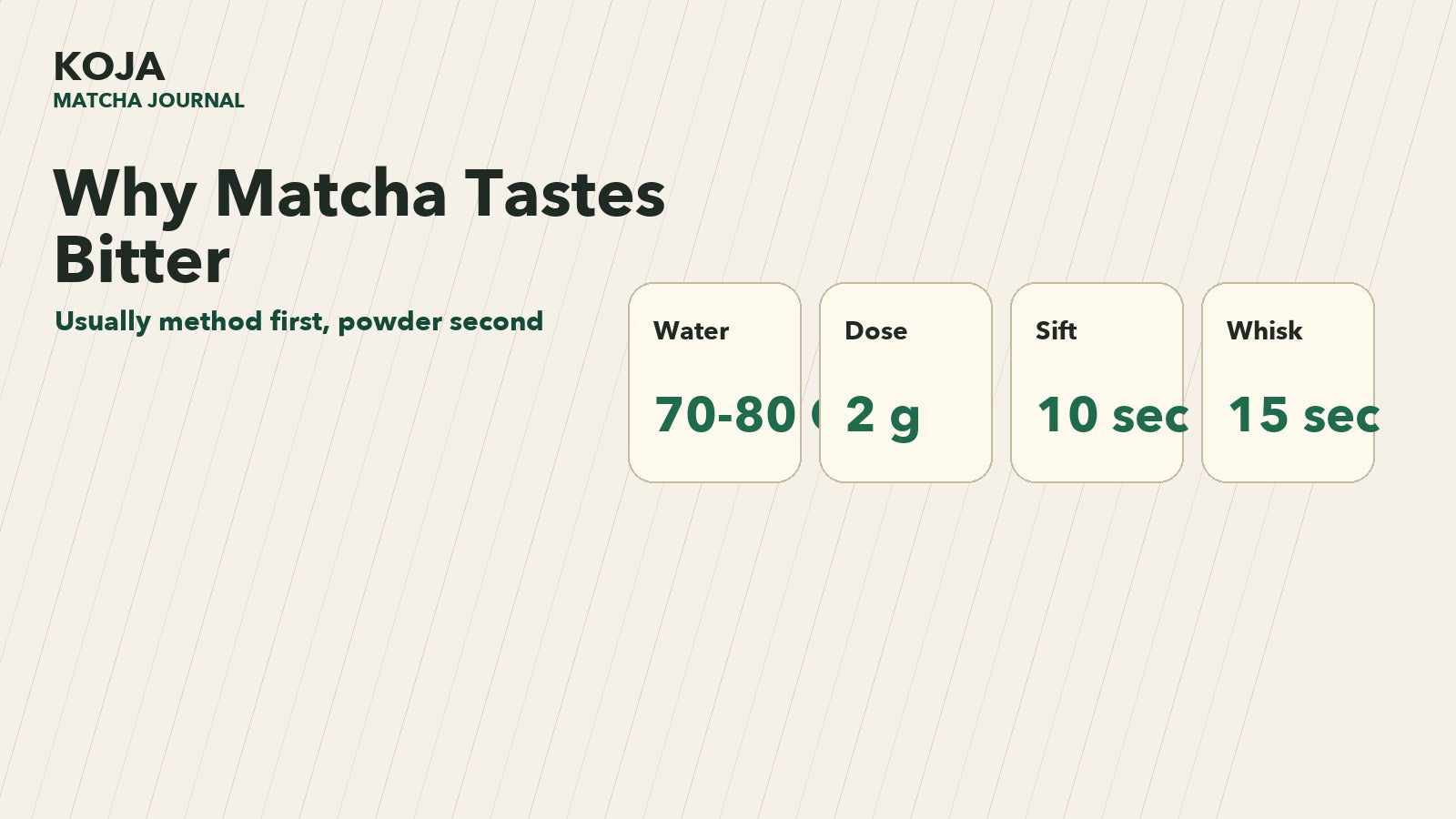
Short answer: Matcha tastes bitter when the method is off or the powder is old, low-grade or badly stored. The 3 usual mistakes are boiling water, skipping the sift and guessing the dose. The honest truth is that some powder cannot be rescued.

Why does matcha taste bitter?
Matcha tastes bitter when too much astringency reaches the cup. That can come from water that is too hot, clumps of concentrated powder, an overloaded dose or leaf material that was never meant for a straight bowl.
Good matcha is not candy. It can be grassy, creamy, umami-rich and lightly bitter at the edge. It should not taste like scorched spinach or dusty seaweed.
Is boiling water the biggest mistake?
Yes. Boiling water is the fastest way to make matcha taste harsh. Use 70-80 C, not water straight from the kettle.
No thermometer is fine. Boil, wait about a minute, then pour. If your first bowl tastes sharp, lower the temperature before changing anything else.
Do clumps make matcha taste bitter?
Yes. Clumps taste bitter because they hit your tongue as concentrated dry powder. A good whisk cannot always break compacted powder once water is already in the bowl.
The fix is simple: sift for 10 seconds. If you drink matcha daily, a matcha sifter is not decorative. It is texture control.
How much matcha powder should you use?
Use 2 g for a proper bowl. Too little powder tastes thin and watery. Too much powder turns intense fast, especially if the grade is not built for straight drinking.
A chashaku can help, but the first week is easier with a scale. Once your hand learns 2 g, you can stop making it a science project.
When is the powder the real problem?
The powder is the problem when it is dull, olive, gritty or harsh even with 70-80 C water and a clean 2 g dose. Technique can fix bad preparation. It cannot turn stale or low-grade powder into ceremonial matcha.
Check the product's intended use. Latte-grade matcha can be excellent in milk and too assertive as a straight bowl. Ceremonial matcha should taste balanced in water. Daily matcha should be honest about being built for routine.
Storage matters too. Matcha hates light, heat and air. Once a tin is open, keep it sealed and finish it while the color is still vivid. A forgotten tin in a warm kitchen will not taste like the first week, even if it started as good powder.
What is the clean bitter-matcha fix?
The clean fix is a four-part method: sift 2 g, add 60-70 ml water at 70-80 C, whisk for 15-20 seconds and taste before adding milk.
- Sift 2 g matcha into the bowl.
- Add 60-70 ml water at 70-80 C.
- Whisk quickly in a W motion until the surface looks even.
- Drink straight or add milk for a latte.
The full method is here: how to make matcha.
Fix the method, then choose the grade
If you want a straight bowl, start with ceremonial matcha. If you want a forgiving daily cup or latte, start with Daily matcha or Matcha for Latte.
FAQ
Why does matcha taste bitter?
Most bitter matcha comes from boiling water, clumps, too much powder or old low-grade powder. Fix method first, then judge the matcha.
What water temperature is best for matcha?
Use 70-80 C. Boiling water makes even good matcha taste harsher than it should.
Can milk fix bitter matcha?
Milk can soften bitterness, but it does not fix poor powder. For lattes, choose a blend built for milk rather than hiding bad matcha.
Keep reading: What Good Matcha Should Taste Like · How to Choose Matcha
Share:
What 'Ceremonial Grade' Matcha Actually Means
How Much Does a Matcha Habit Actually Cost?